Often, we forget that lakes and ponds are natural ecosystems. Underneath the surface of the water is a very complex web of plants, fish, invertebrates, and a wide variety of organisms such as phytoplankton (microalgae and Cyanobacteria) and zooplankton (includes tiny crustaceans, rotifers, insect larvae). This array of creatures creates a natural food web, and the populations often go through cycles of high and low abundance. Have you ever noticed that during some weeks, the water in Onota Lake is extremely clear, and other weeks, the water appears cloudy? This is often due to the cycles of phytoplankton and zooplankton abundance in the underwater ecosystem.
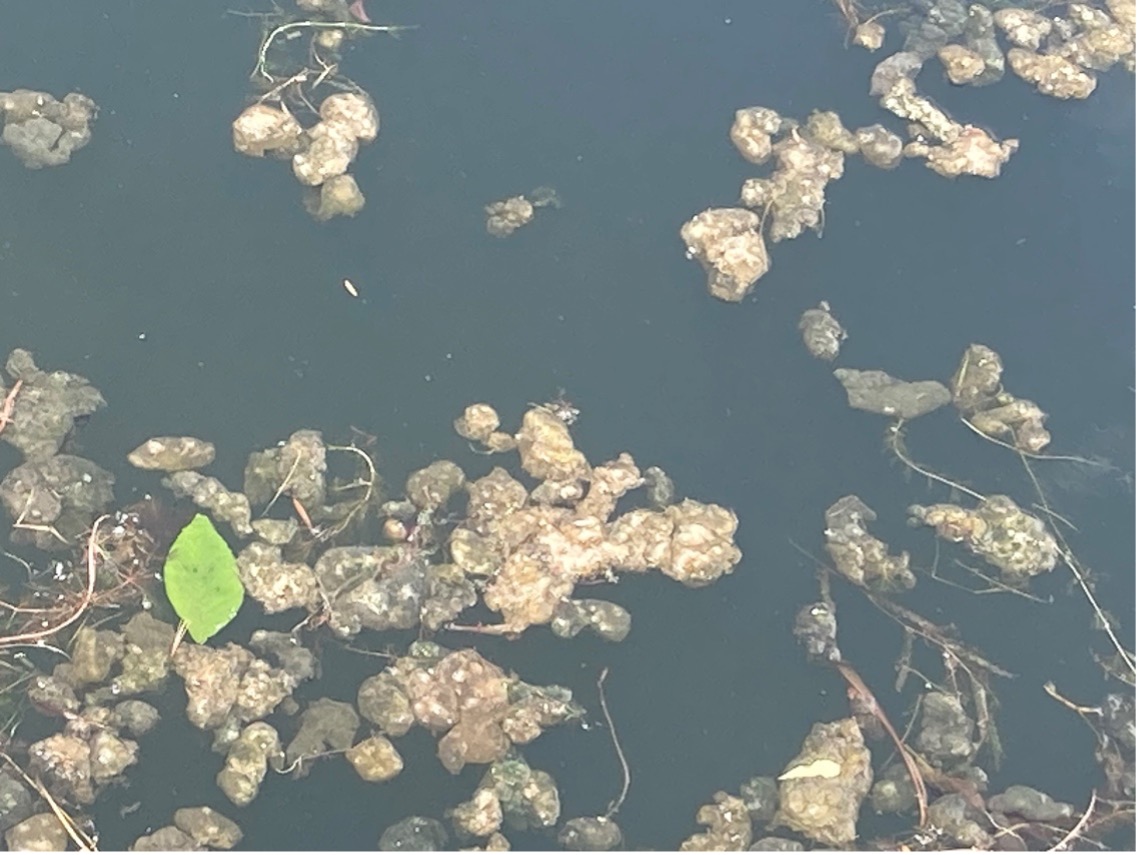
Currently, we seem to be going through a boom cycle in Ophrydium, which are the green blobs that you may have noticed on the surface of the water, or on the bottom of Onota Lake. Each one of the green blobs is a complex colony formed by microscopic, trumpet-shaped micro-zooplankton called Ophrydium. Ophrydium is a type of Ciliate, which is a complex group of microscopic, single-celled organisms defined by hair-like appendages that they use to propel themselves through the water (similar to Paramecium that you may have studied in high school biology). Each Ophrydium ciliate secretes a jelly-like matrix that holds them together. These “blobs” are then colonized by other micro-organisms, including algae. The blobs appear green because the ciliates have a symbiotic relationship with a type of algae that lives within the ciliate and provides the ciliate with food through photosynthesis. The ciliates provide protection and nutrients to the algae. These colonies will sometimes be on the lake bottom and sometimes become buoyant and float to the surface, all depending on the metabolic activity of the organisms. At times when parts of the blob die off, they can appear brown or orange in color. That’s a complex mini-ecosystem all by itself indeed!
Ophrydium are harmless and are actually an indicator of clean, oxygen-rich water and exist in water bodies throughout the world. They will go through boom and bust cycles based on the availability of nutrients, sunlight, water movement, and other conditions in the complex, underwater ecosystem. Although Onota Lake is currently experiencing a “boom” in the Ophrydium cycle, we expect that at some point a corresponding “bust” in the cycle will occur, and we will see a reduction in the population. We are continuing to learn more about Ophrydium and other organisms in our lake, but rest assured that the presence of these green blobs is part of the healthy, complex natural ecosystem of Onota Lake.